Thursday, April 14, 2016

10 Truly Terrible Jet Airplanes: Where's the Ejector Seat Button?

Where's the Ejector Seat Button?


There are few of use who don't feel inspired or captivated by jet airplanes. They're fast, sleek and powerful, but with that being said, there are numerous terrible jets that have taken to the skies over the decades. Here are the 10 worst jet airplanes ever to fly: 
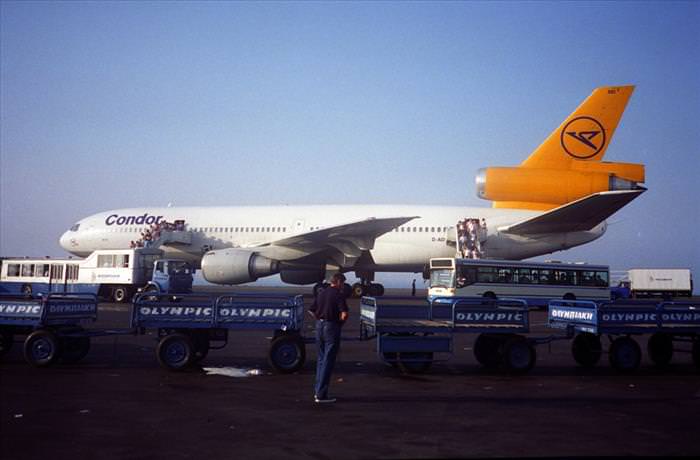
10. Douglas DC-10
The 10 Worst Jet Airplanes Ever to Fly

To date, DC-10s have been involved in 55 accidents, with many fatalities as a result. Its biggest flaw was that its cargo doors opened outward rather than inward, as is the convention on airplanes. An improperly-secured cargo door blew out during mid-flight in 1972, which prompted a re-design. A highly similar accident occurred in 1974, followed by an engine falling off a DC-10’s wing during take-off in 1979. The airplane remains in service as a cargo plane, and is much safer nowadays due to various redesigns and updates.
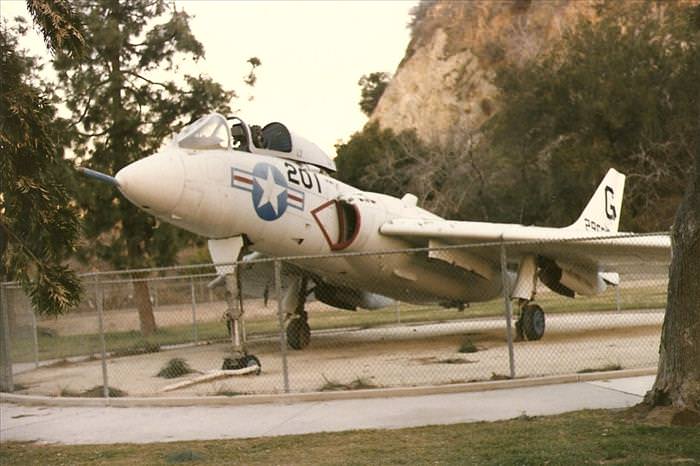
9. Vought F7U Cutlass
The 10 Worst Jet Airplanes Ever to Fly

Although the Cutlass was a unique design for its time, abandoning conventional tail control surfaces for a swept wing design, it had teething problems from the very moment it took off. Admittedly the aircraft was fast, however it struggled to stay in flight on occasion. In addition, its Westinghouse turbojet engines did not have enough thrust for adequate take-offs and landings. No less than the first three prototypes crashed, together with the first two airplanes delivered to the US Navy. While the airplane was designed to give the military a boost, it ended up reverting to older fighter jets. A quarter of all the F7Us delivered were lost in accidents.
8. PZL M-15
The 10 Worst Jet Airplanes Ever to Fly

Designed in Poland, this odd-looking jet was the only mass-produced biplane in history, which is all well and good, only it was terrible. It was actually designed as a crop duster, spraying Soviet farms with pesticides, but it ended up being more expensive to run than the planes it was supposed to replace. In hindsight, it was probably a silly idea to demand that a crop duster design incorporate jet power for propulsion. Rumor has it that the plane could also have doubled up for use in chemical warfare during a Soviet invasion of Europe, however whether there’s any truth in it remains unknown.
7. Yakovlev Yak-38
The 10 Worst Jet Airplanes Ever to Fly

The Harrier Jump Jet, used by the British Navy, made militaries around the world see the advantage of having a vertical take-off and landing fighter in their arsenals, including the Soviet Union. The awful Yakovlev Yak-38 looked like a Harrier, but didn’t really work like one. For starters, its range was pathetic – it could only fly 800 miles at a time, and that was without weapons. Even more farcical was the fact that the airplane could only fly for 15 minutes in hot weather. Furthermore, its lift jets had a service life of 22 hours. It seems appropriate, then, that the ejector seat design in the airplane was a good one.
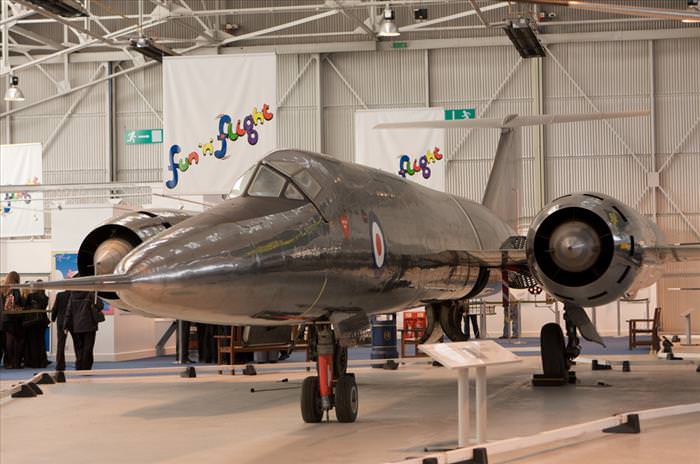
6. Bristol 188
The 10 Worst Jet Airplanes Ever to Fly

Chuck Yeager’s record-breaking run in 1947, in which he broke the sound barrier in a Bell X-1, inspired various air forces around the world to create their own fast research planes. The British Bristol 188 was designed to fly at Mach 2.6, but it was fatally flawed. Its fuel tanks would leak during flight, and it couldn’t even get off the ground until it was traveling at 300mph, necessitating a very long runway for take-off. In addition, the airplane refused to get close to Mach 2, let alone Mach 2.6. After the Royal Air Force sunk £20 million into this white elephant, the project was canceled.
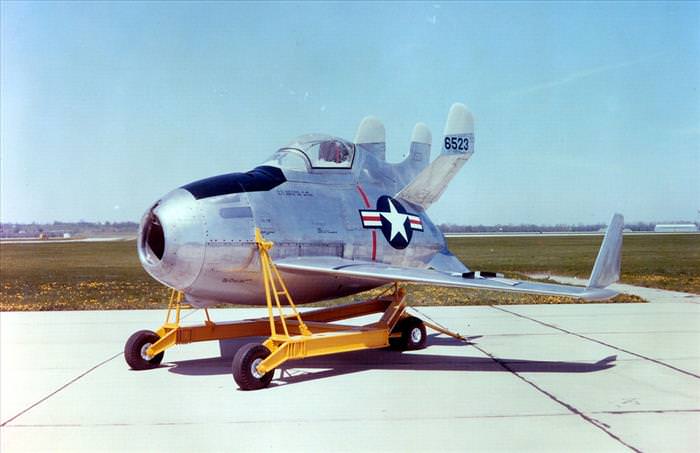
5. McDonnell XF-85 Goblin
The 10 Worst Jet Airplanes Ever to Fly

The Goblin was designed as a parasite fighter, meaning that it would take off attached to a larger bomber, then be released in mid-flight to fight off intercepting airplanes over enemy territory before re-docking with the bomber to return home. The Goblin had two main problems. The first was that it proved impossible to dock with the B-29 mother ship from which it was launched, and the second was that it would be completely outgunned by enemy fighter jets in combat. The latter was because it only had four .50-caliber machine guns. Inevitably, the Goblin project was canceled, but that didn’t stop the US Air Force from exploring numerous other parasite fighter concepts.
4. Baade 152
The 10 Worst Jet Airplanes Ever to Fly

Based on a series of bomber concepts, the Baade 152 was the first-ever German-designed airliner. It incorporated a high-wing design and center-line landing gear with outrigger wheels on the wing tips – features that work well on a bomber, but not so well on an airliner. The prototype crashed during its second flight, killing its entire crew. Another prototype was flown a further three times before engineers discovered that the fuel lines failed on a steep descent, causing the engines to stop running. The project was killed off in 1961, making the 152 the only indigenous East German airplane ever to be built.
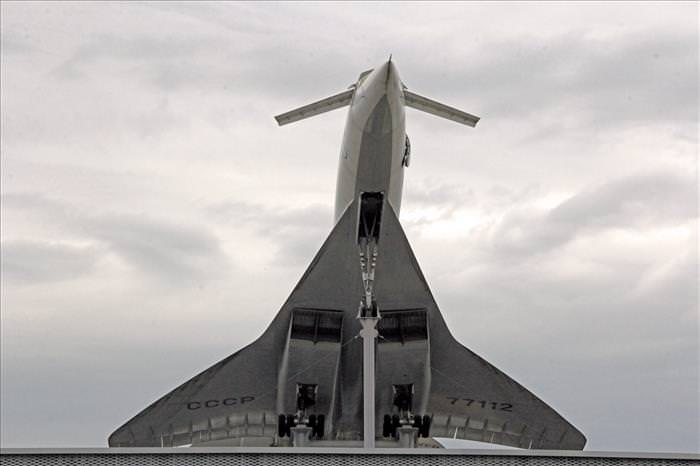
3. Tupolev Tu-144
The 10 Worst Jet Airplanes Ever to Fly

Arguably one of the more recognizable airplanes on this list, the Tupolev was one of two supersonic airliners (the other being Concorde) that entered service in the late 1970s. While Concorde went on to become an icon, the Tu-144 was laughably bad and downright dangerous. The first passenger prototype crashed at the 1973 Paris Air Show, while the airplane suffered system failure on 22 out of its 24 main systems while in mid-flight. What’s more is that engineers had discovered that two of the airframes being used in testing were extremely close to complete structural failure. The Tu-144 only ever flew 55 times before all airframes were grounded for good.

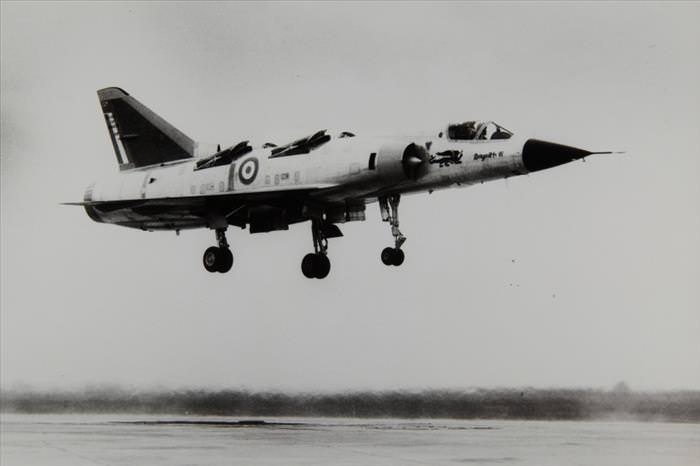
2. Dassault Balzac V and Mirage III V
The 10 Worst Jet Airplanes Ever to Fly

This disastrously bad airplane was a French attempt at a vertical take-off and landing fighter. Based on a modified version of the successful Mirage III fighter, the idea seemed great on paper, but it was catastrophic in practice. It killed two test pilots during testing, but that didn’t stop Dassault into evolving the design into the Mirage III V. The prototype also crashed, however in that instance the pilot managed to eject successfully. The last accident resulted in the company abandoning VTOL fighters and moving on to other projects.
1. De Havilland Comet
The 10 Worst Jet Airplanes Ever to Fly

Although the Comet went on to have a long and successful career, there were numerous fatal accidents involving the world’s first commercial jet-powered airliner. From overshooting runways, to disastrous mid-air decompressions and buckling fuselages, the Comet became the poster child for how not to design a jet airliner. Although the airplane was redesigned and updated numerous times during its service life, the early, fatal accidents ruined its reputation, meaning it never sold in very big numbers. Nevertheless, the lessons learned served the aviation industry in good stead for many decades to follow.

Thursday, March 31, 2016

Financial Illiteracy is Rampant Among College Students


While building credit and maintaining a good credit history remains a necessary tool for Americans in order to provide financial opportunities such as obtaining a loan for a mortgage or to make other large purchases, recent studies revealed that many Americans do not have any credit and in many cases do not even know what a credit score is.

In a recent survey of 668 Bay Area college students containing questions about consumer credit and how it effects financial decisions conducted by LendEDU, the results revealed that 59.3 percent of respondents could not produce a broad definition of a credit score.

“Our survey wasn’t limited only to individuals with student debt,” LendEDU CEO Nate Matherson said. “Unfortunately, we found that the majority of current college students know very little about building and maintaining consumer credit. Our results are once again startling, disturbing, and showcase the appalling level of financial illiteracy among our country’s brightest minds.”

The results of the survey were in line with the findings of a study released last May by the Consumer Financial Protection Bureau (CFPB) which found that approximately 26 million American adults (about 10 percent) were “credit invisible,” or in other words, they do not have a credit history or not enough of a credit history to produce a score with any of the three nationwide consumer reporting agencies (Equifax, Experian, or Transunion).

"A limited credit history can create real barriers for consumers looking to access the credit that is often so essential to meaningful opportunity—to get an education, start a business, or buy a house,” CFPB Director Richard Cordray said. “Further, some of the most economically vulnerable consumers are more likely to be credit invisible."

Despite the importance of building and maintaining a good credit history, the Council of Economic Education (CEE) stated in its 2016 annual report that only 17 states require high school students to take a course in personal finance. There are no such requirements in California, the location of the LendEDU survey.

The survey showed that 42.5 percent of respondents did not believe that student debt was important in determining a credit score—and this despite the fact that seven out of every 10 college graduates leave campus with an average of $30,000 in student loan debt. Also, 42.4 percent of respondents could not name even one way to improve a credit score. Nearly half (45.5 percent) of respondents could not identify even one factor used to determine a credit score; 65 percent said they did not have a credit card in their own name; and 72 percent of the respondents who did have a credit card said they did not know their credit score.

Click here to see the full results of the LendEDU survey.

Monday, March 21, 2016

Financial Advice from Warren Buffet


Warren Buffet is often ranked among the top 5 richest men in the world. His fortune is estimated at around 50 billion dollars, 99% of which he intends to give to charity after his death. This self made billionaire often gives advice to the top leaders of the world. Let's take a look at some of his wise words:


On Reputation
It takes 20 years to build a reputation and five minutes to ruin it. If you think about that, you'll do things differently. 

On his most basic rules
Rule No.1: Never lose money. Rule No.2: Never forget rule No.1. 

On sources of income
Never count on a single income. Make investments to create additional sources of revenue.

On spending
If you buy things you don't need, you'll soon have to sell things you do need.

On saving
Don't save what you have left after spending, but spend what you have left after saving.

On taking risks
Never measure the depth of a river with both legs.

On honesty
Honesty is a very expensive thing, don't expect it from cheap people.

On inheritance
A rich man must leave his children enough to do anything, but not enough to do nothing.

On ideas
You do things when the opportunities come along. I've had periods in my life when I've had a bundle of ideas come along, and I've had long dry spells. If I get an idea next week, I'll do something. If not, I won't do a damn thing. 

On the trickle theory
The rich are always going to say that, you know, just give us more money and we'll go out and spend more and then it will all trickle down to the rest of you. But that has not worked the last 10 years, and I hope the American public is catching on. 

On investing in the future
Someone's sitting in the shade today because someone planted a tree a long time ago. 

On Habits
Chains of habit are too light to be felt until they are too heavy to be broken. 

warren buffett

On becoming rich
I always knew I was going to be rich. I don't think I ever doubted it for a minute. 

On learning from betters
It's better to hang out with people better than you. Pick out associates whose behavior is better than yours and you'll drift in that direction.  

On price and value
Price is what you pay. Value is what you get. 

On taxes for the rich
If anything, taxes for the lower and middle class and maybe even the upper middle class should even probably be cut further. But I think that people at the high end - people like myself - should be paying a lot more in taxes. We have it better than we've ever had it. 

On challenges
I don't look to jump over 7-foot bars: I look around for 1-foot bars that I can step over. 

On being rich
Of the billionaires I have known, money just brings out the basic traits in them. If they were jerks before they had money, they are simply jerks with a billion dollars. 

On risk
Risk comes from not knowing what you're doing.

On wall street
Wall Street is the only place that people ride to in a Rolls Royce to get advice from those who take the subway. 

On how he invests
I never attempt to make money on the stock market. I buy on the assumption that they could close the market the next day and not reopen it for five years. 

On hindsight
In the business world, the rearview mirror is always clearer than the windshield. 

On ponzi schemes
Only when the tide goes out do you discover who's been swimming naked. 

On learning from history
If past history was all there was to the game, the richest people would be librarians. 

On healing the economy 
Economic medicine that was previously meted out by the cupful has recently been dispensed by the barrel. These once unthinkable dosages will almost certainly bring on unwelcome after-effects. Their precise nature is anyone's guess, though one likely consequence is an onslaught of inflation. 

Wednesday, March 16, 2016

The Ultimate Memory Test

Memory is a tricky thing. It's so hard to know if we actually have a good memory or not. It's one of those things that improves the more you test it and practice using it. Before you is the ultimate memory quiz - to ace it would place you in the upper 1% of the world's population. Don't worry if you don't make the cut though - you can also be in the upper 25, 50 or 99% range! Are you ready? 


Thursday, March 10, 2016

Stronger than Expected February Hiring Lifts Market Confidence

Supports Momentum of Commercial Real Estate

March 8, 2016
  • Employers demonstrated the strength of the U.S. labor market in February as it continued to shrug off lingering global economic uncertainty and softness in oil and gas industries. Jobs were created in multiple service sectors of the economy and at government agencies during the month, helping to maintain gauges of labor market capacity at tight levels. While wage growth continues to search for a stimulus that will impart greater traction, the U.S. labor market nonetheless appears in sound condition in advance of a Federal Reserve meeting in March.
  • U.S. employers added 242,000 positions in February, and upward revisions were made to the preceding two months. Job growth during February also left the unemployment rate unchanged but reduced the under-employment rate to 9.7 percent, the lowest reading in nearly eight years. Employment sectors requiring considerable interaction with consumers grew substantially during the month. Recently hired employees continue to land on healthcare rolls, supporting a gain of approximately 57,000 healthcare workers. Retailers, meanwhile, created nearly 55,000 jobs, primarily at food and beverage stores, while changes in lifestyles that favor dining out supported hiring at bars and restaurants that accounted for most of the 48,000 leisure and hospitality jobs created.
  • A sizable volume of multifamily and hotel projects, and a resurgence in other commercial property development, is spurring growth in construction payrolls. Builders brought on 19,000 new employees in February, primarily in subcontracting trades. Despite the gain, a shortage of workers leaves subcontractor employment nearly 700,000 positions below the pre-recession peak, thereby straining the ability of developers to staff new projects and placing upward pressure on costs. An index of construction costs rose in February and is up 2.2 percent from one year earlier.
  • Elevated completions will place upward pressure on U.S. apartment vacancy in 2016, while the rising costs of building will sharpen developers’ focus on higher-end, amenity-rich projects that offer returns that align with the required investment. Class A apartment construction in a few major metros will account for a large portion of the 285,000 units slated for delivery this year and contribute to an uptick in national vacancy to 4.2 percent. Dallas/Fort Worth, Houston and New York City headline the list of major metros due for significant supply growth this year.
  • Professional and business services, and financial services maintained a steady pace of growth in February, adding a combined 29,000 positions. As new workers are hired, the amount of underutilized spaces in office buildings continues to dwindle. Further staff expansions may necessitate a reconsideration of tenants’ space requirements, providing a lift to space demand as leases for larger layouts are executed and move-ins take place. New space demand will trim U.S. office vacancy to 14.8 percent in 2016, while the average rent will increase 3.9 percent.
Marcus & Millichap